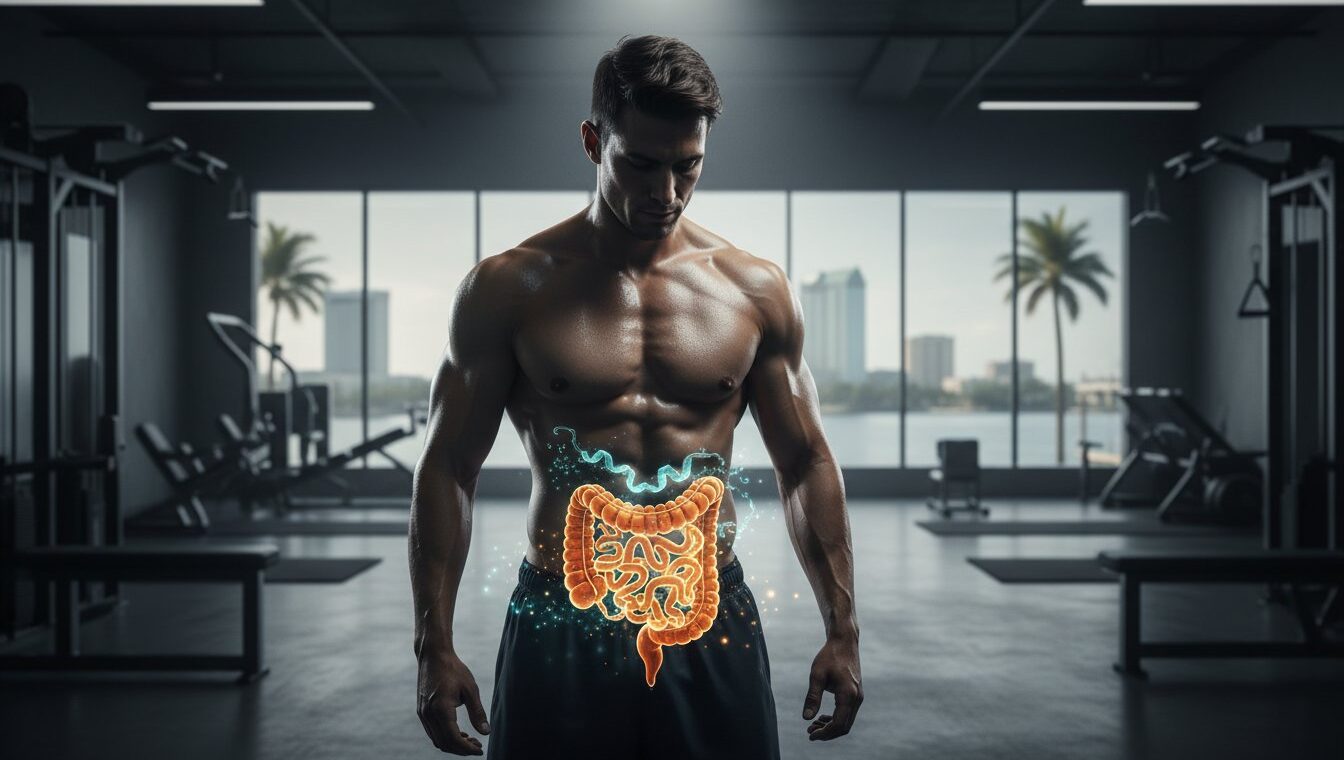
What if the 225 grams of premium protein in your daily regimen are only yielding 60% of their intended anabolic utility? You’ve likely felt that heavy, lethargic bloating after a precision-engineered meal, realizing that a clean diet doesn’t always equate to efficient absorption. It’s a frustrating reality for the 74% of high-performance athletes who experience digestive distress while pushing their physiological limits. Integrating clinical-grade **digestive enzymes** into your routine solves this by acting as metabolic catalysts that transform complex nutrients into bioavailable fuel.
This guide explains how to use these enzymes to maximize nutrient partitioning and accelerate your recovery times. You’ll discover the science behind eliminating gastrointestinal discomfort while ensuring every gram of protein is used for muscle synthesis. We’ll provide a technical breakdown of enzyme kinetics and a structured approach to optimizing your internal environment for elite-level performance. It’s time to stop wasting your macros and start fueling your body with pharmaceutical-grade precision. We’re moving beyond basic supplementation into the realm of total metabolic optimization.
Key Takeaways
- Understand how specialized proteins function as biological catalysts to accelerate nutrient breakdown and maximize metabolic efficiency for elite-level performance.
- Discover why high-intensity training necessitates supplemental digestive enzymes to maintain nutrient partitioning when physiological stress diverts blood flow from the gastrointestinal tract.
- Learn to identify specific enzyme classes, such as proteases and lipases, that are critical for converting complex macronutrients into bioavailable substrates for muscle repair and hormonal health.
- Master the clinical standards of enzyme potency by prioritizing standardized activity units over deceptive milligram measurements to ensure pharmaceutical-grade efficacy.
- Implement a precision-timed protocol for enzyme integration and synergistic stacking to optimize your recovery window and long-term physiological trajectory.
What Are Digestive Enzymes? The Biological Catalysts of Metabolic Efficiency
Digestive enzymes are specialized catalytic proteins that accelerate the chemical breakdown of macronutrients into their most elemental forms. Without these biological catalysts, the body’s ability to dismantle complex food matrices would be too slow to sustain life or support elite physical performance. These enzymes function by lowering the activation energy required for hydrolysis, the process where water molecules break chemical bonds in proteins, fats, and carbohydrates. For the high-performance athlete, digestive enzymes represent the bridge between raw caloric intake and cellular fuel.
The human body utilizes a tripartite production strategy to manage this workload. Production initiates in the salivary glands, continues in the stomach, and culminates in the pancreas, which functions as the metabolic powerhouse of the system. We categorize these catalysts into two distinct groups: endogenous and exogenous. Endogenous enzymes are synthesized within your own organs; exogenous enzymes are introduced via raw, nutrient-dense foods or physician-formulated supplements. The singular goal of this enzymatic activity is metabolic optimization. It transforms a complex 50-gram protein bolus into individual, bioavailable amino acids ready for muscle tissue repair and systemic recovery.
The Mechanism of Action: How Enzymes Work
Enzymes operate through a high-precision lock and key mechanism. Each enzyme possesses a specific active site designed to bind with a corresponding substrate, such as a carbohydrate or lipid molecule. This structural specificity ensures that salivary amylase only targets starches, while proteases focus exclusively on peptide bonds. The journey begins in the mouth, but the environment changes rapidly. In the stomach, pepsin requires a highly acidic pH between 1.5 and 2.5 to activate. Once food enters the small intestine, the pH must rise toward a neutral 6.0 to 7.0 to trigger pancreatic digestive enzymes. Precision in these pH levels is the primary determinant of enzymatic efficiency and nutrient yield.
Why Bioavailability is the True Metric of Nutrition
In the pursuit of peak performance, the mantra “you are what you eat” is scientifically incomplete; you are what you absorb. Bioavailability refers to the actual percentage of a nutrient that reaches systemic circulation. This is preceded by bioaccessibility, which is the amount of a nutrient released from the food matrix during the digestive process. When enzyme production is compromised, undigested food particles can bypass the intestinal barrier. This often triggers an immune response, leading to systemic inflammation that hinders recovery. Research suggests that optimizing enzymatic activity can increase amino acid uptake by up to 20%, ensuring that your dietary discipline translates into measurable ergogenic gains rather than metabolic waste.
The Primary Enzyme Classes: Breaking Down Proteins, Fats, and Carbohydrates
To achieve metabolic optimization, your body relies on a specialized trio of macronutrient catalysts. Without sufficient digestive enzymes, even the most meticulously planned diet fails to deliver its full ergogenic potential. These biochemical tools are the gatekeepers of nutrient bioavailability, ensuring that the fuel you consume actually reaches the bloodstream and target tissues. While your body produces these naturally, the demands of high-intensity training and calorie-dense diets often exceed endogenous production capacities.
The system utilizes three primary classes of digestive enzymes to maintain this equilibrium:
- Proteases: These enzymes target peptide bonds to disassemble complex protein structures into bioavailable amino acids.
- Lipases: These facilitate the hydrolysis of fats into fatty acids and glycerol, supporting cellular energy and structural integrity.
- Amylases: These convert starches and complex carbohydrates into glucose, providing the primary fuel for glycolytic performance.
Beyond these primary drivers, secondary enzymes provide comprehensive coverage for specific dietary components. Lactase breaks down the lactose found in dairy; cellulase assists in the processing of plant fiber; and sucrase manages the conversion of simple sugars. Together, these enzymes prevent the gastrointestinal distress often associated with high-volume nutritional protocols.
Protease and the Athletic Recovery Cycle
Protease activity is the foundation of muscle remodeling. Elite athletes often consume 2.2 grams of protein per kilogram of body weight, a threshold that can overwhelm standard digestion. When protease levels are optimized, the rate of amino acid delivery to damaged muscle fibers increases significantly. This rapid transit supports faster tissue repair and has been linked to a reduction in delayed onset muscle soreness. By ensuring protein doesn’t sit undigested in the gut, you eliminate the bloating that can hinder your next training session.
Lipase and Metabolic Health
Lipase is the primary enzyme for lipid metabolism and cellular membrane integrity. This enzyme ensures the absorption of fat-soluble vitamins, specifically A, D, E, and K, which are critical for bone density and immune resilience. Efficient fat digestion also plays a vital role in maintaining the delicate balance between testosterone and cortisol. When lipase activity is insufficient, the body struggles to synthesize the cholesterol needed for steroid hormone production, potentially leading to metabolic fatigue. You can support these critical pathways by exploring our pro-grade recovery formulations designed for maximum nutrient uptake.
Beyond Basic Digestion: Why Elite Performance Requires Enzyme Optimization
A common misconception persists that healthy athletes with clean diets don’t require supplemental support. This overlooks the physiological reality of high-output training. During a 60-minute session of high-intensity interval training or heavy resistance work, the body diverts up to 80% of blood flow away from the digestive organs to support skeletal muscle and thermoregulation. This temporary gut shutdown means your post-workout meal often hits a system that isn’t biologically prepared to process it. Optimization isn’t just for those with deficiencies; it’s for anyone pushing their physiological limits.
Elite performance creates a Performance Gap. This occurs when your caloric requirements, often exceeding 3,500 to 5,000 calories per day, surpass your pancreas’s natural ability to secrete digestive enzymes. If you can’t break down these nutrients, you aren’t just wasting money on high-quality food; you’re failing at nutrient partitioning. True partitioning ensures that glucose and amino acids are funneled toward muscle recovery and glycogen replenishment instead of contributing to systemic inflammation or fat storage. You must bridge this gap to turn caloric intake into measurable power output.
The Impact of High-Calorie Protocols on the Pancreas
Bulking cycles and high-frequency feeding schedules put immense pressure on endogenous enzyme production. Constant demand for protease and lipase can lead to pancreatic fatigue and that chronic, lethargic feeling after meals. Using supplemental digestive enzymes alleviates this burden, allowing for faster gastric emptying. This is critical for recovery. When the gut processes food efficiently, the body transitions more quickly from a sympathetic state to a parasympathetic “rest and digest” state. This shift can improve deep sleep quality by as much as 20%, as the body isn’t working overtime to process undigested matter during the night.
Combatting Digestive Stress and Systemic Inflammation
When large protein molecules remain undigested, they can irritate the intestinal lining and trigger an immune response. This systemic inflammation is the enemy of performance. It diverts metabolic resources away from muscle repair and toward immune defense. Maintaining a precise enzymatic environment supports a healthy microbiome by preventing the fermentation of undigested carbohydrates in the colon. For those seeking a comprehensive approach to internal health, MNM ProLabs Wellness supplements provide the clinical strength foundation required for long-term systemic integrity and peak physical condition.
Evaluating Digestive Enzyme Supplements: Purity, Potency, and Clinical Standards
Many retail supplements hide their lack of efficacy behind “proprietary blends.” This marketing tactic obscures the actual dosage of individual digestive enzymes, making it impossible to verify if the product meets therapeutic thresholds. If a label lists a 500mg blend without specifying the activity of each component, it’s a guess, not a protocol. Serious athletes don’t guess. You need to look for activity units rather than weight. Milligrams measure mass, but units like HUT (Hemoglobin Unit on the Tyrosine basis) for protease, DU (Dextrinizing Units) for amylase, and FIP (Fédération Internationale Pharmaceutique) for lipase measure actual enzymatic power.
The Physician-Formulated Difference
Elite performance requires more than raw ingredients; it demands metabolic precision. Choosing physician-formulated supplements ensures that each enzyme is selected for its biochemical synergy and ability to survive the gastrointestinal gauntlet. Most generic enzymes denature in the stomach’s 1.5 to 3.5 pH environment before they reach the small intestine. Pro-grade formulas utilize acid-stable enzymes that remain functional across a wider pH range to ensure maximum nutrient breakdown. Clinical-strength enzymes are those verified for potency through rigorous lab testing.
Identifying Quality Markers: NSF and FDA Registration
Transparency is the baseline for any disciplined athlete. A facility must be FDA-registered and cGMP-certified to ensure that what’s on the label is exactly what’s in the capsule. cGMP (current Good Manufacturing Practice) standards require 100% verification of raw materials and finished goods to prevent cross-contamination. Athletes must prioritize clean labels to avoid “magic” claims or unnecessary fillers like maltodextrin that can disrupt the gut microbiome. Third-party testing ensures that a product contains zero banned substances and meets 99.9% purity standards, providing the security needed for competitive environments. For those seeking the highest standards of supplement purity, our comprehensive analysis of Pure Encapsulations clinical purity standards demonstrates how professional-grade formulations eliminate the 30+ common allergens and fillers that often compromise metabolic efficiency.
- Avoid Prop-Blends: Demand full disclosure of every enzyme’s activity level.
- Verify Standards: Only trust facilities that maintain rigorous cGMP and FDA registration.
- Prioritize Bioavailability: Ensure the digestive enzymes are acid-stable to survive the stomach.
Don’t settle for under-dosed formulas that compromise your recovery. Optimize your gut health with medical-grade digestive support designed for high-performance results.
Integrating Digestive Support into Your High-Performance Protocol
Optimization requires technical discipline. You aren’t just what you eat; you’re what you assimilate. For high-performance athletes consuming 3,500 to 5,000 calories daily, the metabolic load on the gastrointestinal tract is immense. Supplementing with digestive enzymes ensures this high caloric intake translates into muscle protein synthesis rather than systemic inflammation or gastrointestinal distress. It’s the difference between fueling a machine and merely filling a tank.
Strategic Timing for Maximum Bioavailability
Precision timing dictates the efficacy of your supplementation. You should take enzymes within 15 minutes of your first bite or during the meal itself. This ensures the exogenous enzymes mix thoroughly with the food bolus as it enters the acidic environment of the stomach. Taking them on an empty stomach is a wasted resource, as they require a substrate to act upon.
During the 30-minute post-workout window, rapid nutrient uptake is critical for halting muscle catabolism. Utilizing enzymes alongside MNM ProLabs Recovery supplements accelerates the breakdown of dense protein sources into bioavailable amino acids. This targeted approach reduces the transit time in the digestive tract and speeds the delivery of glycogen and nitrogen to depleted muscle fibers when they’re most receptive.
Stacking is essential for total gut-to-muscle optimization. Combine digestive enzymes with 5 grams of L-glutamine to support intestinal wall integrity and a high-colony-count probiotic to maintain microbiome diversity. This triple-threat approach addresses the mechanics, the environment, and the structure of the gut. You should also adopt mindful eating habits to complement your stack:
- Mechanical Breakdown: Chew each bite at least 25 times to initiate salivary amylase secretion.
- Vagal Tone: Practice deep breathing before meals to shift from a sympathetic state into a parasympathetic “rest and digest” state.
- Hydration Logic: Limit fluid intake during large meals to prevent the dilution of natural hydrochloric acid.
The MNM ProLabs Standard: Precision and Purity
We build our formulations on the pillars of clinical research and veteran-led discipline. Every product is physician-formulated and manufactured in GMP-certified facilities to ensure pharmaceutical-grade purity. We don’t settle for “industry standard” because elite performance demands more than the bare minimum. Explore the full MNM ProLabs Shop to find the professional-grade tools required for your physical evolution. Optimization isn’t a single act; it’s the result of uncompromising standards in every facet of your daily protocol.
Execute Your Nutritional Strategy with Precision
Your training intensity is only as effective as your biological ability to fuel it. Without the necessary digestive enzymes to catalyze the breakdown of complex macronutrients, even the most precise nutrition plan fails to reach its full ergogenic potential. Clinical data suggests that enzymatic optimization can improve protein utilization by up to 20% in high-stress environments, ensuring your muscles receive the precise amino acids they require for repair. You shouldn’t leave your recovery to chance when the science of bioavailability is this clear.
MNM ProLabs bridges the gap between ingestion and absorption. Our supplements are physician-formulated for elite performance and produced in FDA-registered, cGMP-certified facilities. We verify every batch through rigorous third-party testing to ensure 100% purity and potency. This isn’t about basic digestion; it’s about metabolic optimization for the disciplined athlete who refuses to settle for average results. Don’t let your nutrition go to waste.
Optimize your nutrient uptake with MNM ProLabs Physician-Formulated Supplements
Take control of your physiology and demand more from your supplements today.
Frequently Asked Questions
What is the difference between digestive enzymes and probiotics?
Digestive enzymes are specialized proteins that catalyze the chemical breakdown of macronutrients, whereas probiotics are live microbial strains that populate the gut microbiome. While probiotics support long-term immune function and gut barrier integrity; digestive enzymes act immediately in the stomach and small intestine to hydrolyze proteins, fats, and carbohydrates. Using both creates a synergistic effect, but they serve distinct physiological roles in the human digestive tract.
Can I get enough digestive enzymes from natural food sources like pineapple or papaya?
You can obtain small quantities of enzymes like bromelain and papain from raw pineapple and papaya, but these sources rarely provide the clinical dosages required for metabolic optimization. Most raw fruits contain less than 5% of the enzymatic activity found in a concentrated, pro-grade supplement. To achieve a therapeutic effect that matches laboratory standards, an elite athlete would need to consume unrealistic volumes of fruit, which also introduces excess fructose into the diet.
Is it safe to take digestive enzyme supplements every day?
It’s safe for healthy individuals to supplement with digestive enzymes daily to ensure consistent nutrient bioavailability. Clinical studies, including a 2016 review of enzyme therapy, indicate that the body doesn’t stop producing its own endogenous enzymes due to supplementation. Maintaining a daily protocol helps manage the metabolic load of high-calorie diets, especially during 12-week bulking phases where caloric intake increases by 20% or more.
How do I know if I have a digestive enzyme deficiency?
Common indicators of a deficiency include post-prandial bloating, flatulence, and the presence of undigested food particles in the stool. If you experience a 15% drop in energy levels after eating, your body might be diverting too much ATP toward difficult digestion. Chronic malabsorption can also lead to micronutrient deficiencies that show up in blood panels as low levels of fat-soluble vitamins like A, D, E, and K. Additionally, maintaining proper electrolyte balance for optimal cellular conductivity becomes more challenging when nutrient absorption is compromised.
Do digestive enzymes help with weight loss or metabolic rate?
Digestive enzymes don’t directly burn fat, but they optimize the metabolic rate by ensuring efficient nutrient partitioning and energy extraction. When your body breaks down 98% of your protein intake instead of 80%, you provide more substrates for muscle protein synthesis. This increased lean mass elevates your basal metabolic rate, which helps the body maintain a leaner composition during rigorous training cycles.
Can digestive enzymes reduce bloating after a high-protein meal?
Yes, specific proteases significantly reduce bloating by accelerating the breakdown of complex protein chains into absorbable amino acids. High-performance diets often include 200 grams of protein or more; this volume can overwhelm the pancreas. Utilizing a supplement with a high HUT (Hemoglobin Unit Tyrosine) rating ensures that these proteins don’t ferment in the gut, preventing the 2 to 3-inch waistline expansion often seen after heavy meals.
What should I look for on a digestive enzyme supplement label?
Look for activity units like HUT for proteases, DU for amylase, and FIP for lipase instead of just milligram weights. A 500mg blend means nothing if the enzymatic activity levels aren’t verified through third-party testing. Choose formulas manufactured in GMP-certified facilities that list every strain clearly. This transparency ensures you’re getting pro-grade ingredients that meet pharmaceutical standards for purity and potency.
What happens if I take digestive enzymes on an empty stomach?
Taking enzymes on an empty stomach means they won’t assist with food breakdown, as there’s no substrate to act upon. However, when taken away from meals, certain proteases may enter the bloodstream to provide systemic benefits like reducing exercise-induced inflammation. For 100% focus on nutrient absorption, you should consume them within 15 minutes of your first bite to maximize their contact with the food bolus.
Disclaimer
Content on the MNM ProLabs Blog is provided for informational and educational purposes only and should not be considered medical advice. Always consult a qualified healthcare professional before making changes to your health, diet, training, or supplementation routine. Statements regarding supplements have not been evaluated by the FDA and are not intended to diagnose, treat, cure, or prevent any disease.
2 Comments
[…] and reducing nocturnal cramping. To further enhance this process, elite athletes often leverage the science of digestive enzymes to ensure that every milligram of a high-performance stack is broken down and delivered to the […]
[…] to baseline environments. To combat this, the body requires efficient mineral uptake. The role of digestive enzymes is vital here, as they optimize the breakdown of nutrients and ensure that supplemented minerals […]