

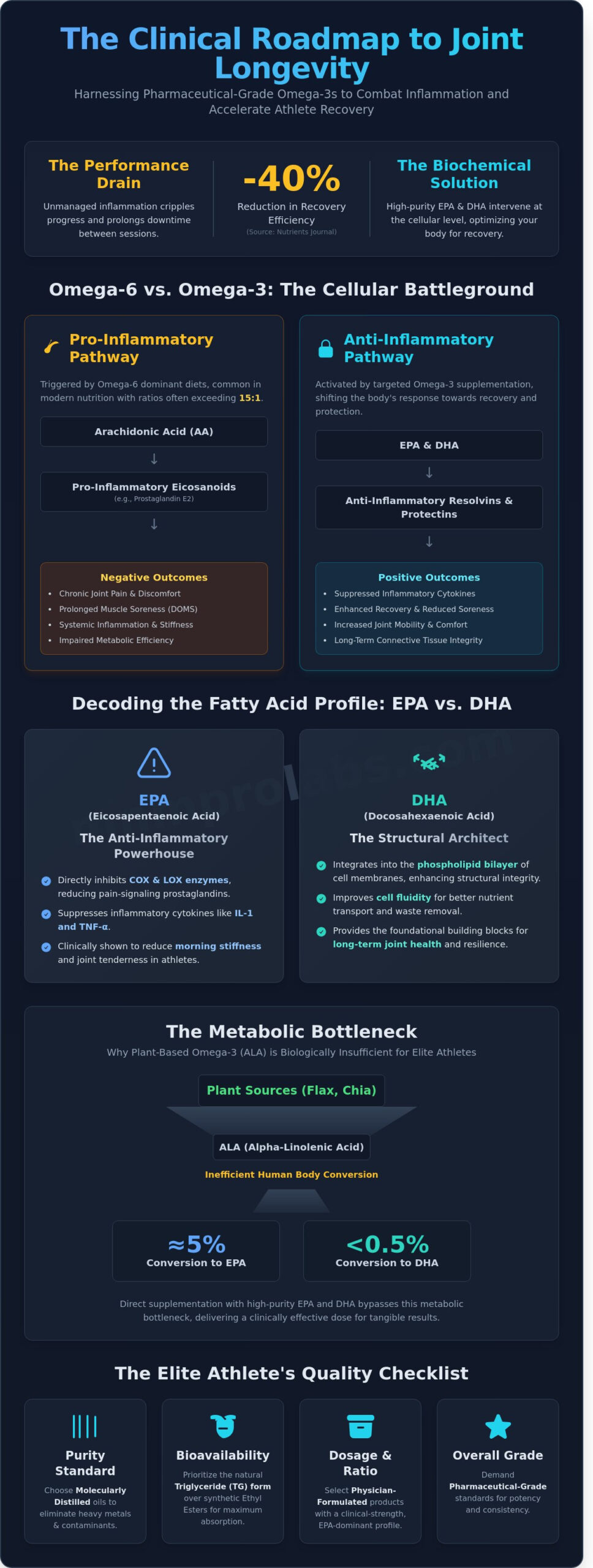
Your ability to sustain peak force production is only as reliable as the structural integrity of your connective tissues. While many athletes accept post-training stiffness as a badge of discipline, clinical research published in the journal Nutrients indicates that systemic inflammation can reduce recovery efficiency by up to 40% when left unmanaged. Relying on synthetic painkillers provides a temporary reprieve; however, it doesn’t address the underlying biochemical stress. To achieve true longevity, you must leverage the specific omega-3 benefits for joint pain that come from pharmaceutical-grade fatty acids.
We understand that you’re tired of the hyperbolic claims and the lack of transparency in the supplement aisle. You need a recovery strategy that’s as rigorous as your training block. This guide promises to strip away the marketing hype and provide a definitive clinical roadmap for using high-purity EPA and DHA to optimize your biological machinery. We’ll examine the cellular mechanisms of inflammation, the importance of molecular distillation, and the exact protocols needed to protect your joints for the long haul.
Key Takeaways
- Understand the metabolic pathways of eicosanoids and how polyunsaturated fatty acids intervene in the inflammatory cascade triggered by high-intensity training.
- Learn to distinguish between EPA and DHA to prioritize systemic inflammation reduction and cellular structural integrity for superior recovery.
- Discover the clinical dosage requirements and omega-3 benefits for joint pain to effectively manage your baseline inflammatory load based on training volume.
- Identify the critical differences between Triglyceride and Ethyl Ester forms to ensure maximum bioavailability and avoid the signs of oxidized, low-quality oils.
- Explore why physician-formulated, pharmaceutical-grade standards are essential for elite athletes who require uncompromising purity and metabolic optimization.
The Biochemistry of Joint Inflammation and Omega-3 Intervention
Omega-3 fatty acids are essential polyunsaturated fatty acids (PUFAs) that the human body cannot synthesize internally. They’re vital for metabolic optimization, serving as more than just a calorie source. Understanding the biochemistry of omega-3 fatty acids is necessary for any athlete looking to mitigate the wear and tear of high-output training. These molecules act as the foundational building blocks for cell membranes, directly influencing how the body responds to mechanical stress.
To better understand how these lipids interact with joint health, watch this clinical overview from a rheumatology perspective:
During high-intensity training, the body initiates an inflammatory cascade mediated by eicosanoids. While Omega-6 pathways often produce pro-inflammatory signaling molecules like prostaglandin E2, Omega-3 pathways generate anti-inflammatory resolvins and protectins. High Omega-6 intake, often found in modern diets with ratios exceeding 15:1, can exacerbate joint discomfort. By shifting this ratio through targeted supplementation, athletes can leverage omega-3 benefits for joint pain by suppressing the production of inflammatory cytokines.
EPA (eicosapentaenoic acid) and DHA (docosahexaenoic acid) integrate directly into the phospholipid bilayer of cell membranes. This structural shift displaces arachidonic acid, reducing the substrate available for inflammatory enzymes. This isn’t just about simple lubrication. It’s about changing the chemical composition of your cells to favor recovery over degradation. Research indicates that maintaining high membrane concentrations of these fatty acids improves the fluid dynamics of cells, allowing for better nutrient transport and waste removal during the recovery phase.
Chronic vs. Acute Inflammation in Athletes
Acute inflammation is a necessary physiological response that drives muscle protein synthesis and tissue remodeling after a 60-minute hypertrophy session. However, repetitive mechanical stress often transitions into chronic joint stress, leading to the degradation of synovial tissue and collagen structures. Systemic inflammation in the context of ergogenic recovery is a persistent, low-grade immune activation that impairs metabolic efficiency and prolongs downtime between sessions.
Prostaglandins: The Molecular Messengers of Pain
Omega-3s function by inhibiting the cyclooxygenase (COX) and lipoxygenase (LOX) enzymes. These enzymes are responsible for synthesizing prostaglandins, the primary molecular messengers that signal pain to the central nervous system. This natural mechanism mirrors the action of non-steroidal anti-inflammatory drugs (NSAIDs) like ibuprofen, but without the 20% increased risk of gastrointestinal lining erosion associated with long-term pharmaceutical use. Utilizing physician-formulated precision ensures that EPA and DHA dosages are high enough to effectively compete for these enzymatic sites, providing a cleaner route to omega-3 benefits for joint pain and systemic longevity.
EPA vs. DHA: Decoding the Fatty Acid Profile for Joint Pain
Understanding the biochemistry of polyunsaturated fatty acids is vital for any athlete seeking metabolic optimization. When analyzing omega-3 benefits for joint pain, the distinction between Eicosapentaenoic acid (EPA) and Docosahexaenoic acid (DHA) determines the efficacy of the recovery protocol. While both are essential, they serve divergent physiological roles. EPA is the primary driver for downregulating the inflammatory cascade, whereas DHA provides the structural integrity required for long term joint health.
Plant-based sources like flaxseed contain Alpha-linolenic acid (ALA), which many mistakenly view as a viable alternative. However, the human body is remarkably inefficient at processing ALA. Conversion rates to the active EPA form typically hover around 5%, while conversion to DHA often drops below 0.5%. For an elite performer, relying on ALA is biologically insufficient. Professional grade supplementation bypasses this metabolic bottleneck by providing direct, high bioavailability doses of EPA and DHA.
EPA: The Anti-Inflammatory Powerhouse
This specific fatty acid acts as a competitive inhibitor against arachidonic acid. By occupying the same enzymatic pathways, EPA reduces the production of pro-inflammatory eicosanoids and cytokines like Interleukin-1 (IL-1) and Tumor Necrosis Factor-alpha (TNF-α). This biochemical “interference” is what mitigates the systemic inflammation that leads to chronic soreness.
Data from a 2017 meta-analysis indicates that clinical strength EPA dosages significantly reduce morning stiffness and the number of tender joints in high impact athletes. By suppressing the inflammatory markers that degrade cartilage, EPA functions as a protective shield for the joint capsule. For those requiring pharmaceutical grade purity, the MNM Omega-3 formulation is engineered to deliver a concentrated EPA profile that targets these specific inflammatory pathways.
DHA: Structural Support Beyond the Brain
Docosahexaenoic acid serves as a critical structural component of the phospholipid bilayer in cellular membranes. Within the context of orthopedic health, DHA is essential for maintaining the viscosity and volume of the synovial fluid. This fluid acts as the primary lubricant and shock absorber within the joint capsule, preventing the mechanical friction that leads to micro-traumas during repetitive loading.
A study conducted in 2020 highlighted that DHA also offers synergistic cardiovascular benefits, improving oxygen delivery to peripheral tissues during intense endurance training. This dual role makes it indispensable for athletes who demand both structural resilience and aerobic efficiency. Organizations like the Arthritis Foundation have noted the utility of managing arthritis with omega-3s, emphasizing that clinical dosages are necessary to move the needle on joint comfort.
Maximizing the omega-3 benefits for joint pain requires a strategic ratio that favors EPA for acute inflammation while maintaining enough DHA for structural maintenance. Athletes looking for an uncompromising edge should integrate targeted recovery protocols that utilize these fatty acids in their most potent, bioavailable forms.
Bioavailability and Purity: Why Pharmaceutical Grade Matters
Bioavailability isn’t a luxury for the elite athlete. It’s a physiological requirement. Many athletes mistakenly believe that all fish oil is created equal, yet the “fish oil burp” often experienced with retail brands is a clinical red flag. This unpleasant aftertaste usually indicates that the oil has oxidized, meaning it’s rancid and potentially pro-inflammatory. To maximize omega-3 benefits for joint pain, the oil must remain stable and be delivered in a form the body can actually use.
The Triglyceride Advantage
Efficiency in nutrient delivery depends heavily on molecular structure. Most low-cost supplements utilize Ethyl Ester (EE) forms, a synthetic substrate created by reacting fatty acids with ethanol. While cheaper to produce, the body struggles to process these effectively. Research, including a notable 2010 study published in Prostaglandins, Leukotrienes and Essential Fatty Acids, demonstrates that the natural Triglyceride (TG) form is up to 70% more absorbable than its synthetic counterparts.
Choosing Physician Formulated Supplements ensures you’re receiving the TG form, which bypasses the taxing conversion process required by EE oils. This metabolic optimization allows for faster saturation of the lipid bilayer, delivering EPA and DHA directly to inflamed tissues. High-performance recovery requires this level of precision to ensure that every milligram consumed contributes to cellular repair and systemic inflammation reduction.
Purity Standards: Beyond Consumer Grade
Achieving “Pro-grade” status requires more than just a clean label. It demands a rigorous molecular distillation process. This technique utilizes a vacuum to separate long-chain fatty acids from environmental toxins like mercury, lead, and PCBs. At MNM ProLabs, we prioritize transparency by adhering to standards that exceed the Global Organization for EPA and DHA Omega-3s (GOED) requirements.
- TOTOX Score: We monitor the Total Oxidation Value to ensure the oil is fresh and potent. A high TOTOX score means the oil is degrading, which can negate the omega-3 benefits for joint pain you’re seeking.
- Third-Party Testing: Every batch undergoes independent verification to confirm potency and the absence of heavy metals.
- cGMP Certification: Our products are manufactured in FDA-registered facilities that follow Current Good Manufacturing Practices, ensuring consistency and safety.
Rigorous testing isn’t just about safety; it’s about efficacy. When you’re pushing your body to its absolute limit, you cannot afford to introduce contaminants that trigger an immune response. We maintain an uncompromising commitment to purity, providing elite performers with the clinical strength tools they need to sustain peak physical condition without the risks associated with sub-standard manufacturing.
Optimizing Your Joint Recovery Protocol: Dosage and Synergy
To extract the full omega-3 benefits for joint pain, you must treat your supplementation with the same precision as your macro-nutrient tracking. For the elite athlete, a casual approach to fish oil is insufficient for managing the systemic inflammation caused by chronic mechanical loading. A clinical protocol requires a structured, four-step approach to ensure these fatty acids actually reach the synovial fluid and joint tissues.
- Step 1: Assess Inflammatory Load. Calculate your total weekly training volume. High-intensity cycles involving 15 or more hours of metabolic stress demand higher concentrations of EPA to counteract cytokine production.
- Step 2: Establish Clinical Dosage. Aim for a combined 2,000mg to 3,000mg of EPA and DHA daily. This exceeds standard consumer-grade recommendations but aligns with data required to alter the Omega-3 Index in active populations.
- Step 3: Optimize Bioavailability. Always consume your dosage with a meal containing at least 10 to 15 grams of fat. Lipids trigger the release of bile salts, which are necessary to emulsify the omega-3s for proper intestinal absorption.
- Step 4: Implement Strategic Stacking. Combine fatty acids with structural proteins and anti-inflammatory compounds to attack joint degradation from multiple physiological angles.
Effective Dosing for Elite Performers
Standard RDA levels are designed to prevent deficiency in sedentary individuals, not to optimize recovery in athletes under heavy metabolic stress. When you’re crushing a 500-rep leg session or a 20-mile trail run, your oxidative stress markers spike far beyond the capacity of a standard 500mg capsule. We recommend a “loading phase” of 3,000mg for the first 4 weeks to rapidly shift the fatty acid composition of your cell membranes. After this initial period, a maintenance dose of 2,000mg is typically sufficient. Consistency is your most powerful tool; it takes 6 to 12 weeks of daily adherence to achieve full tissue saturation and observe the maximum omega-3 benefits for joint pain.
Synergistic Pairings for Maximum Joint Resilience
Omega-3s are excellent at managing the “fire” of inflammation, but they don’t provide the raw materials for structural repair. Pairing high-grade fish oil with MNM Collagen creates a dual-action environment where inflammation is suppressed while the body has the specific amino acids required for connective tissue synthesis. For a complete performance stack, consult our Creatine Monohydrate guide to understand how cellular hydration supports joint lubrication. Because cartilage is largely avascular, it relies on osmotic pressure and proper hydration to receive nutrients. Maintaining an intake of 3 to 4 liters of water daily, supplemented with essential micronutrients, ensures your joints remain resilient under the heaviest loads.
Eliminate recovery bottlenecks and protect your longevity with the MNM ProLabs Recovery Collection.
The MNM ProLabs Standard: Physician-Formulated Joint Support
MNM ProLabs operates at the intersection of clinical science and elite performance. As a veteran-owned and physician-led organization, we don’t settle for the industry standard of “good enough.” Our approach treats the human body as a high-precision machine. We design every product to meet the demands of athletes who require 100% transparency and pharmaceutical-grade purity. When you prioritize omega-3 benefits for joint pain, you deserve a formulation that reflects the latest in biochemical research and rigorous field testing.
Our brand’s foundation is built on discipline. We understand that elite performers view their health as a strategic asset. We utilize molecular distillation and advanced filtration to ensure our fatty acid profiles are free from heavy metals and environmental toxins. This commitment to “Medical Grade” quality means our supplements are prepared to withstand the scrutiny of professional athletes and medical professionals alike.
Why a Physician-Led Formulation Changes the Game
Clinical expertise eliminates the vague fluff that often permeates the supplement market. Our founder, a physician with an analytical mind for metabolic optimization, ensures every nutrient ratio is precise and evidence-based. This “High-Performance Scientist” persona drives us to create Medical Grade Supplements that provide predictable, ergogenic results. We focus on bioavailability and synergistic effects; we ensure that every milligram of EPA and DHA serves a functional purpose in reducing systemic inflammation.
While other brands use proprietary blends to hide low-quality ingredients, we provide full disclosure. Our physician-led team analyzes the data to determine the exact concentrations required to support synovial fluid health and cartilage integrity. We don’t guess at the science. We apply it to help you maintain a competitive edge and achieve pro-grade recovery.
Uncompromising Quality: The Final Verdict
For the serious athlete, purity and potency are non-negotiable. MNM ProLabs utilizes third-party testing and GMP-certified facilities in the USA to guarantee that what’s on the label is in the bottle. We’ve removed the guesswork from recovery protocols. By choosing our formulation, you join a community of elite performers who refuse to compromise on their physical longevity or performance ceilings. The omega-3 benefits for joint pain are most effective when supported by rigorous manufacturing standards and clinical strength dosages.
Stop settling for average recovery when elite optimization is within reach. It’s time to upgrade your protocol with a brand that values discipline as much as you do. Our products are designed for those who demand the best fuel for their high-precision biological machines. Shop the MNM ProLabs Supplement Collection today to secure the professional-grade support your training demands.
Precision Strategies for Joint Longevity
Elite performance requires more than just effort; it demands biological precision. Understanding the specific biochemistry of inflammation allows you to move beyond temporary fixes and address the root cause of physical friction. By prioritizing a high-potency ratio of EPA and DHA, you can effectively leverage omega-3 benefits for joint pain to maintain structural integrity during high-intensity training cycles. This isn’t about masking symptoms; it’s about providing the metabolic building blocks necessary for cellular repair and long-term mobility.
Quality remains the ultimate differentiator when optimizing your physiology. While standard consumer-grade supplements often contain heavy metals or oxidized oils, your recovery protocol should rely on pharmaceutical-grade standards. MNM ProLabs ensures every batch is Physician-Formulated and Third-Party Tested for Purity. We manufacture our supplements in FDA-Registered Facilities to guarantee that what’s on the label matches what’s in the bottle. This commitment to transparency ensures you’re fueling your body with the cleanest, most bioavailable fatty acids available today. Don’t settle for average results when your performance is on the line.
Optimize Your Recovery with MNM ProLabs Omega-3
Your dedication to training deserves a recovery strategy that’s equally rigorous. Stay disciplined in your pursuit of excellence.
Frequently Asked Questions
How long does it take for Omega-3 to help with joint pain?
You should expect to see measurable improvements in joint mobility within 6 to 12 weeks of consistent supplementation. This timeframe allows for the long-chain fatty acids to integrate into your cell membranes and displace pro-inflammatory arachidonic acid. Achieving the full omega-3 benefits for joint pain depends on maintaining a daily intake of at least 2,000mg to 3,000mg of combined EPA and DHA to reach cellular saturation.
Can I take Omega-3 with my pre-workout supplement?
You can safely take Omega-3 with your pre-workout, though it doesn’t provide an immediate ergogenic boost like caffeine or beta-alanine. Since fatty acids require dietary fats for optimal absorption, taking them with a whole-food meal is more effective for bioavailability than consuming them on an empty stomach before a training session. Focus on consistency rather than precise timing to support long-term systemic inflammation reduction and metabolic optimization.
Is krill oil better than fish oil for joint inflammation?
Krill oil offers higher bioavailability due to its phospholipid structure, but fish oil typically provides higher total concentrations of EPA and DHA. A 2011 study in the journal Lipids showed that krill oil absorption is 30% more efficient than standard fish oil. However, elite athletes often require the higher absolute dosages found in pharmaceutical-grade fish oil to suppress intense, training-induced inflammation effectively. Pro-grade fish oil remains the clinical standard for high-dose therapy.
What is the best EPA to DHA ratio for joint health?
A 3:2 or 2:1 ratio of EPA to DHA is the most effective clinical standard for addressing joint discomfort. Research from the Arthritis Foundation suggests that EPA is the primary driver for reducing joint swelling and stiffness. A precision dose of 1,500mg of EPA to 1,000mg of DHA optimizes the suppression of pro-inflammatory cytokines. This ratio ensures your physiological pathways prioritize the resolution of acute inflammation over general cognitive maintenance.
Are there any side effects of high-dose Omega-3 for athletes?
Daily intakes up to 5,000mg of EPA and DHA are confirmed as safe by the FDA, though minor digestive issues can occur at these levels. Some athletes report mild gastrointestinal distress or a persistent fishy aftertaste when using lower-quality formulas. You can mitigate these issues by choosing enteric-coated, third-party tested supplements that undergo molecular distillation. This process removes heavy metals and environmental toxins, ensuring your high-performance regimen remains uncompromising and pure.
Can Omega-3 supplements replace NSAIDs for workout recovery?
Omega-3s serve as a sustainable, non-toxic alternative for chronic inflammation management, though they don’t provide the immediate analgesic effect of NSAIDs. A study of 250 patients published in Surgical Neurology found that 1,200mg of daily omega-3s was as effective as ibuprofen for pain reduction after 75 days. Utilizing omega-3 benefits for joint pain involves a fundamental shift in your body’s inflammatory response, offering a superior long-term recovery strategy without gastric risks.
How do I know if my fish oil supplement is rancid?
A strong, pungent fishy odor or an acrid taste indicates the oil has oxidized and lost its biological efficacy. High-quality labs measure stability through the Total Oxidation (TOTOX) value, which should remain below 26 mEq/kg according to GOED standards. If your capsules cause frequent “fish burps,” it’s often a sign of poor stability or low-grade manufacturing. Always look for nitrogen-flushed packaging and NSF certification to ensure you’re using a stable, pro-grade product.
Disclaimer
Content on the MNM ProLabs Blog is provided for informational and educational purposes only and should not be considered medical advice. Always consult a qualified healthcare professional before making changes to your health, diet, training, or supplementation routine. Statements regarding supplements have not been evaluated by the FDA and are not intended to diagnose, treat, cure, or prevent any disease.